Column · @daltonclwh208
The Appeal of Fotona 4D Laser Facial (TimeWalker) for Encino, CA Patients
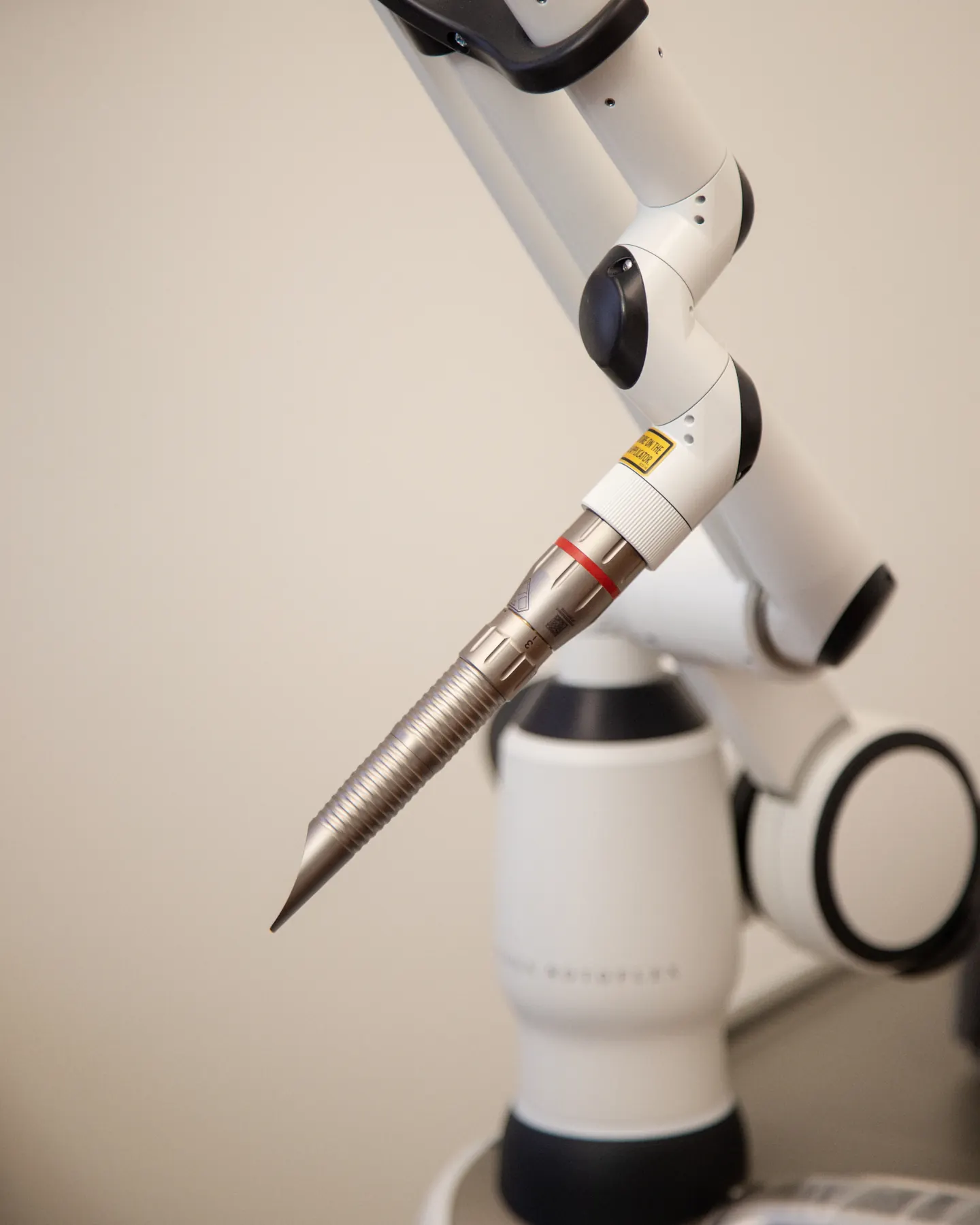
Encino patients tend to know exactly what they want from aesthetic treatments. They are rarely looking for a dramatic, overworked result. More often, they want fresher skin, better tone, less creasing around the mouth and eyes, and a face that looks rested in natural light, not only in a treatment room mirror. That preference helps explain the growing interest in the Fotona 4D Laser Facial (TimeWalker) in Encino, CA.
This treatment has earned attention because it speaks to a very specific kind of patient. It appeals to people who want visible improvement without the social downtime that can come with more aggressive resurfacing. It also attracts patients who are not ready for surgery, or who simply do not need it. In my experience, that middle ground is where many people actually live. Their concerns are real, but they are nuanced. They may have mild laxity along the jawline, etched lines around the mouth, a dull skin surface, or a gradual loss of bounce through the midface. None of those issues exists in isolation, which is why a layered treatment often makes more sense than a single-mode laser session.
Fotona 4D was designed with that layered thinking in mind. Rather than addressing only the surface or only the deeper tissue, it combines multiple steps in one session to target texture, tone, tightening, and collagen remodeling from different angles. For the right patient, that combination can be a practical and satisfying option.
Why this treatment fits the Encino patient mindset
Encino sits in a part of Los Angeles where appearance matters, but so does discretion. Patients often want to improve their skin in a way that looks believable. They do not necessarily want friends or colleagues asking what they had done. They want comments like, “You look good,” or “Did you change your skincare?” That is a very different goal from trying to look twenty years younger overnight.
The appeal of the Fotona 4D Laser Facial (TimeWalker) in Encino, CA comes from how well it aligns with that mindset. It is often marketed as a non-surgical rejuvenation treatment, which is broadly true, but that phrase can be too vague to be useful. What matters more is how the treatment behaves in real life. Patients usually appreciate that it can improve the look of skin quality and mild laxity without the prolonged rawness associated with stronger ablative procedures. They also like that it can treat areas that are difficult to address with topical products alone, especially around the perioral region.
There is another practical reason it resonates here. Many Encino patients already invest in maintenance, whether that means sunscreen, neurotoxin, filler, peels, facials, or prescription skincare. They are not starting from zero. They are looking for treatments that build on a solid foundation. Fotona 4D works well in that kind of treatment philosophy because it can be part of a broader plan rather than a one-time fix.
What Fotona 4D actually is
Despite the name, Fotona 4D is not one single laser pass. It is a sequence of treatment modes that work at different depths and from different angles, including from inside the mouth in some protocols. That internal component is one reason it stands out. The oral mucosa allows energy delivery in a way that can support collagen remodeling around the perioral area and lower face without cutting the skin.
The “4D” concept refers to four treatment dimensions or steps, each intended to contribute something different. Depending on the provider, the platform, and the patient’s needs, the exact settings and emphasis can vary. That variability matters. A good treatment is not just the machine. It is the judgment behind how the machine is used.
In simple terms, the treatment often aims to accomplish several goals at once: improve skin texture, encourage collagen production, create gentle tightening, and refine the overall surface. Patients frequently describe their results less as a dramatic transformation and more as a polished version of themselves. Skin may look smoother, the lower face may feel a bit firmer, and makeup may sit better.
That subtlety is part of the appeal, but it also requires honest counseling. Subtle does not mean ineffective. It means appropriate for the category of concern it is meant to treat.
The TimeWalker platform and why branding matters less than technique
Patients often ask whether “TimeWalker” means a completely different treatment from Fotona 4D. In practice, the branding usually refers to the platform and treatment experience rather than a separate category of rejuvenation. The device interface, protocol options, and workflow may differ, but the meaningful question is still the same: who is performing the treatment, how are the settings chosen, and what is the treatment plan over time?
This is where experienced laser providers tend to separate themselves. A machine can be excellent on paper and still disappoint if treatment parameters are too conservative for the patient’s goals or too aggressive for their tolerance and recovery window. There is a balance. In clinic conversations, I have seen this most clearly with patients who say they “tried laser before and it did nothing.” Often the issue was not that lasers do not work. It was that the previous treatment was not matched well to the actual problem.
For someone considering a Fotona 4D Laser Facial (TimeWalker) in Encino, CA, the consultation should feel specific. If every patient receives the same pitch, the same expected timeline, and the same session count, that is a red flag. Skin quality, age-related change, degree of laxity, pigmentation tendency, and daily sun exposure all influence how useful this treatment may be.
The concerns it addresses well
Fotona 4D tends to perform best in the zone between prevention and correction. Patients with mild to moderate skin aging often see the most satisfying balance between result and downtime. Fine lines, crepey texture, enlarged pores, early jowling, and perioral softening are common targets. It can also be appealing for patients whose skin has become dull or uneven even though they are otherwise taking good care of it.
The perioral area deserves special mention. Lines around the mouth are notoriously stubborn because they are shaped by repeated motion, collagen loss, skin thinning, and sometimes volume depletion. A surface treatment alone may help texture but do less for support. A volume treatment alone may soften folds but do less for etched lines. Fotona 4D is appealing because it can work on tissue remodeling in a more layered way.
Patients with early lower face laxity also tend to be interested. Not everyone with mild jowling needs surgery, and not everyone wants fillers placed heavily along the jawline. For that group, a treatment that offers modest tightening without adding volume can make sense.
It can also work nicely for patients who photograph well in controlled lighting but feel their skin looks tired in daylight. That complaint is common, and it often reflects a combination of texture, laxity, and reduced reflectivity rather than one single problem.
What it does not do, and why that honesty matters
One of the most important parts of any laser consultation is naming the limitations clearly. Fotona 4D is not a surgical facelift, and it is not a replacement for surgery when significant skin laxity is present. It will not erase deep static folds in one session. It will not fix heavy neck skin or restore substantial volume loss in the temples and cheeks.
Patients appreciate this honesty more than many providers assume. Overpromising creates disappointment even when a treatment technically works. If a patient in their sixties with pronounced lower face descent is hoping to look tightened enough to avoid surgery indefinitely, they may be better served by a different plan. Sometimes that plan includes energy-based treatment for skin quality, but not as the sole answer.
It is also not the ideal first choice for every skin issue. If pigment is the dominant concern, another laser or light-based option may be more direct. If acne scars are deep and tethered, combination treatment with subcision, resurfacing, or other modalities may be needed. Good medicine is not about insisting one treatment fits every face. It is about knowing where a treatment shines and where it merely plays a supporting role.
The treatment experience patients usually care about most
When patients ask practical questions, they usually want to know four things: how much it hurts, how red they will be afterward, how many sessions they may need, and when they will see results.
Discomfort is usually manageable, though experiences vary. Some parts of the treatment feel warm and prickly, while others create a deeper heating sensation. The intraoral portion sounds intimidating to first-time patients, but many tolerate it better than expected. Topical numbing may be used depending on protocol and provider preference.
Downtime is one of the strongest selling points for this category. Many patients have some redness and mild swelling, often for a day or two, sometimes a bit longer depending on intensity and skin sensitivity. There may be a slightly sandpapery texture for a short period. Most people can return to normal routines fairly quickly, especially compared with aggressive ablative resurfacing.
Visible change can show up in stages. Some patients notice a fresher look within days because of mild swelling and surface refinement. The more meaningful improvement, the kind tied to collagen remodeling, usually unfolds gradually over weeks to months. That delayed payoff is worth explaining well. People tend to be happiest when they know to expect a build rather than an overnight reveal.
A realistic discussion often sounds like this:
- one session may give a nice refresh for the right patient
- a series is often recommended for more meaningful collagen-based improvement
- maintenance helps, especially in sun-exposed Southern California skin
- results depend heavily on baseline skin quality and degree of laxity
- supportive skincare and sun protection affect longevity
Why Southern California sun changes the conversation
Any discussion of facial rejuvenation in Encino has to include sun exposure. Even patients who are diligent now often carry years of cumulative UV damage. Driving, outdoor exercise, tennis, hiking, and day-to-day incidental exposure add up. Sun damage does not just create pigment. It degrades collagen, roughens texture, and contributes to the look of facial aging in ways patients may not fully connect to UV history.
That matters because lasers can stimulate improvement, but they are working against an environment that keeps creating wear. A patient who undergoes Fotona 4D and then returns to minimal sun protection is likely to lose momentum sooner. The best outcomes almost always happen in patients who treat laser as one part of skin stewardship, not a substitute for it.
I have seen this play out many times. Two patients of similar age and similar treatment plans can have noticeably different durability in their results. Often the difference is not mysterious. One is consistent with sunscreen, hats, and active skincare. The other treats those measures as optional. Technology matters, but daily habits still win.
Who tends to be happiest with Fotona 4D
The happiest patients are usually not chasing perfection. They want improvement they can see, but they understand the logic of gradual rejuvenation. They are open to a series if advised. They value a treatment that can fit into real life. And they care about looking better in motion, in daylight, and at conversational distance.
These patients often fall into a few broad categories, though there is plenty of overlap. Some are in their thirties or forties and want to stay ahead of deeper aging changes. Others are in their fifties and want visible rejuvenation without surgery. Some have had injectables and want to improve the skin envelope itself. Others are laser-curious but cautious and want a treatment that feels substantive without sounding extreme.
Patients who do well also tend to understand maintenance. Faces continue to age. Collagen continues to change. Good results are often about trajectory, not permanence.
Pairing it with other treatments, carefully
One reason providers like the Fotona approach is that it can complement other aesthetic tools. That does not mean everything should be done at once. It means treatments can be sequenced intelligently.
For example, if a patient has dynamic expression lines, neurotoxin may still be useful because a laser does not stop the muscle movement creating those lines. If volume loss is hollowing the midface or temples, filler or a biostimulatory injectable may address a dimension laser cannot replace. If surface pigment is dominant, another modality may be layered in at a different time.
The strongest plans are not maximalist. They are selective. A face with mild laxity, lip lines, and dull skin might benefit from Fotona 4D plus careful neuromodulator placement and a retinoid-based home regimen. A face with deeper folds and marked descent may need a more structural conversation. The point is not to add treatments reflexively. It is to solve the actual problem.
A thoughtful provider will usually address a few practical points before combining treatments:
- whether there is enough healing time between procedures
- which concern is primary and should be treated first
- how skin type influences laser settings and recovery
- whether recent filler placement changes the strategy
- what timeline matters to the patient, especially before events
Choosing a provider in Encino
In a market like Encino, the challenge is not finding someone who offers laser treatments. The challenge is finding someone with disciplined judgment. Patients often focus on the device name first, which is understandable, but the provider matters more than the brochure.
A strong consultation should include a close skin assessment, a discussion of prior treatments, review of photos if available, and an honest estimate of expected improvement. It should also include a conversation about alternatives. Fotona 4D Laser Facial (TimeWalker) Encino, CA omniawellnesscenterencino.com If a provider can explain why Fotona 4D is better for you than another treatment, or why it is not, that is usually a good sign.
Ask how often they perform the treatment. Ask what kinds of patients respond best in their hands. Ask what downtime their typical patient experiences. Ask what they would recommend if your main concern were one step more advanced than it is now. Those answers reveal whether the recommendation is tailored or generic.
It is also reasonable to ask about who actually performs the treatment and what the follow-up looks like. Technique, settings, and aftercare instructions all shape the result.
The value of realistic expectations
The phrase “non-surgical facelift” gets attention, but it can set the wrong frame for some patients. Most people considering Fotona 4D do not need hype. They need clarity. The treatment can offer meaningful rejuvenation, especially for skin quality, mild tightening, and perioral improvement, but the best results often come from a series and from combining treatment with good maintenance.
There is something refreshing about a treatment that does not promise fantasy. It offers a measured kind of improvement that suits how many patients actually want to age. Better skin. A firmer look. Softer lines. More confidence in close conversation and under unforgiving daylight. For a large number of Encino patients, that is not a compromise. It is exactly the point.
That is the core appeal of the Fotona 4D Laser Facial (TimeWalker) in Encino, CA. It meets patients where they are, between prevention and correction, between downtime and visible change, between wanting more than a facial and less than surgery. In aesthetic medicine, that middle ground is not small. It is where much of the most thoughtful care happens.
OMNIA Wellness Center
16430 Ventura Blvd Ste 207, Encino, CA 91436
Phone: +1 818-386-8511
FAQ About Fotona 4D Laser Facial (TimeWalker) Encino, CA
What is a Fotona laser good for?
Fotona lasers support several different aesthetic protocols. The Fotona 4D facial uses two wavelengths and four treatment modes to address concerns such as fine lines, skin texture, and mild laxity. OMNIA Wellness Center offers the TimeWalker facial with an individual consultation. Suitability and likely improvement depend on the person's skin and goals; results are not guaranteed, and this treatment does not reproduce a surgical facelift.
How much does a Fotona laser treatment cost?
The cost depends on the treatment protocol, areas treated, number of sessions, and provider's assessment. Ask OMNIA Wellness Center for a current written quote that explains what is included, whether follow-up is included, and any proposed package terms. An individualized estimate is more useful than assuming that one advertised price applies to every facial treatment.
How much downtime is there after a Fotona laser procedure?
Recovery varies with the specific protocol and intensity. Fotona describes its 4D facial as having little to no downtime, but temporary redness or sensitivity can occur, and a stronger surface treatment can require more recovery. Ask the treating clinician what to expect from the planned settings, how to care for the skin afterward, and when to contact the clinic with concerns.